11/12/26
When a Loved One Considers MAiD: The Importance of Compassion, Connection, and Hope
Many of us have never imagined how we would respond if a loved one told us they were considering MAiD. As a mother, there are many conversations I’ve prepared to have with my children, but until recently, medical assistance in dying was never one of them.
According to Health Canada, 76,475 people died from MAiD between 2016 and 2024. Behind each of these numbers is a person, a family, and a story. Many of these individuals experienced suffering that left them feeling as though their lives were no longer worth living.
So how would we respond if a loved one told us they were considering MAiD? The deVeber Institute has spent the past year working alongside physicians, bioethicists, and palliative care professionals to answer that very question.
When a Loved One Considers MAiD offers a guide to navigating these sensitive moments. It reminds us that one of the most important things we can offer someone considering MAiD is a response that says:
I am not afraid to sit with you in your suffering.
Even in your pain, you have a purpose.
I’m so glad you’ve shared this with me.
Stay here a little while. Let’s find the light.
The theme of hope is echoed throughout each page of this guide. It became clear to me that hope plays an important role in helping people endure difficult experiences. Sometimes, knowing that someone is willing to listen, understand, and remain beside us can make all the difference.
As a young teenager, I personally battled with severe depression and suicidal ideation. One day, when I was not sure I could continue on, my father shared a story about a time in his own life when he also felt hopeless and how he found the strength to persevere. In my naivety, I thought I must have heard every story my dad had to tell. But I was wrong. He had saved this story for a moment when I needed it most. He didn't meet me with fear; he met me with compassion. That connection was my lifeline. While our individual experiences of suffering are unique, the power of empathy to connect us and give us hope is universal.
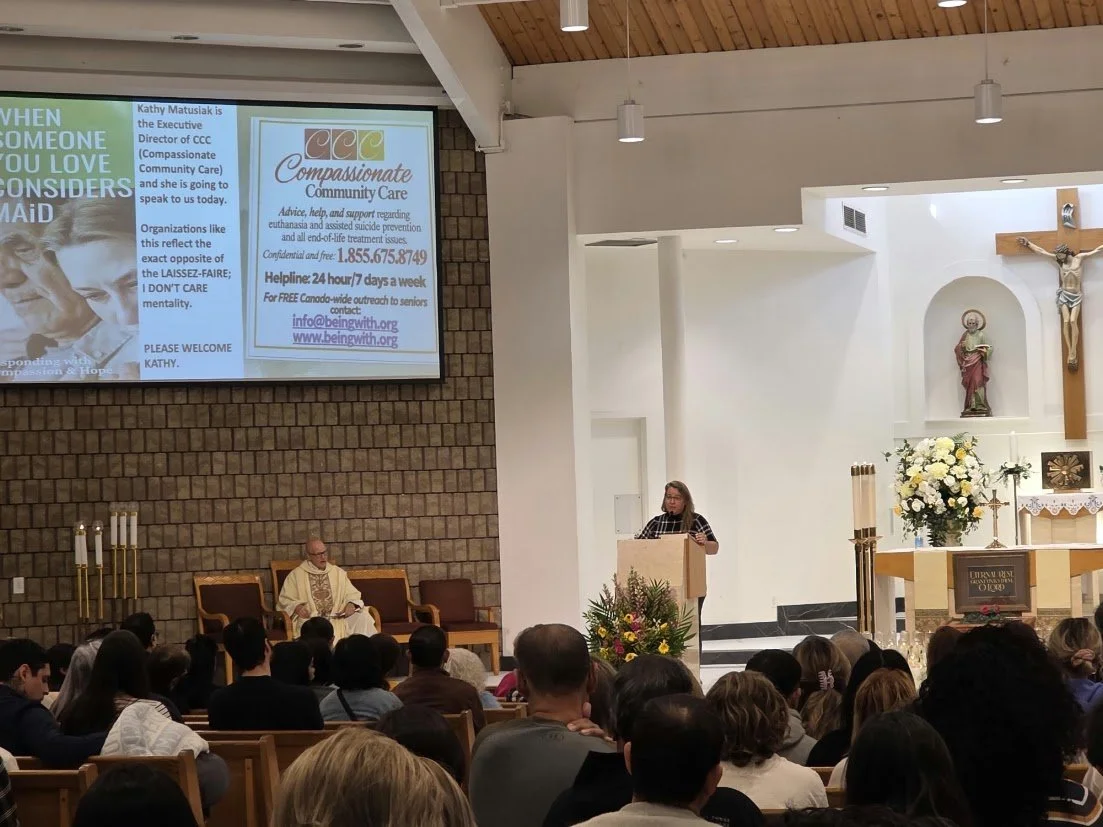
The personal account of Lia Milousis featured in this resource is a brave example of how stories can help us connect. Lia's account shares how her suffering shaped her perception of death, to the point that it began to seem like a refuge. Unfortunately, her experience is not uncommon. Today, she shares her story as a reminder of the importance of hope, human connection, and ensuring that people experiencing suffering know they are not alone.
When a loved one considers MAiD and turns to you, you want to be prepared. This publication provides readers with simple guidance: Listen, empathize, connect, and help them find appropriate support. I'm very grateful for this guide, which prepares us to meet others' vulnerability with compassion rather than fear.
In a society where so many of us feel isolated in our suffering, this guide provides a clear message: even a small offer of compassion can remind someone that they are not alone.
As Canadians continue to become more familiar with MAiD, these conversations become increasingly important. Individuals experiencing vulnerability, isolation, illness, or inadequate support deserve to have their needs heard and addressed. At some point, many of us may find ourselves sitting beside a loved one who, in their suffering, is questioning whether their life is worth continuing. Being prepared to meet these moments with the ability to listen without judgment, offer support, and connect with appropriate resources is something every family can benefit from.
For those wishing to share this guide with others, copies can be ordered directly through the deVeber Institute at deveber.org.
If you find yourself supporting a loved one through a crisis, the Suicide Crisis Helpline (24-hour help, call or text 988) and Compassionate Community Care (1-855-675-8749) are available to offer support. Compassionate Community Care offers additional support and resources for individuals and families navigating illness, suffering, and end-of-life concerns, including mental health resources, pain management support, and pastoral care. Families can learn more about these services by contacting Compassionate Community Care directly.
No matter how difficult life becomes, there is always room for hope, connection, and support.
About the Author
Carling Rygielski is a wife, mother, and volunteer writer with Compassionate Community Care. She is passionate about the dignity and value of every human life and recognizes the essential role of empathy, hope, and compassion in supporting others through times of suffering and uncertainty.
A Call for Compassionate End-of-Life Care
We encountered a case which we want to bring to your attention.
Thankfully, a life was saved. Here’s what happened…
A family recently reached out to Compassionate Community Care when an elderly woman with advanced cancer was experiencing severe pain and was being considered for Medical Assistance in Dying (MAiD). She had previously declined MAiD multiple times because of her faith, but as her condition deteriorated, she began to reconsider and opened to the idea.
Although she never wanted MAiD *(euthanasia), she was offered it and declined multiple times, and refused it, yet near the end she was in so much pain she agreed to MAiD.
Compassionate Community Care, with consultations with the Euthanasia Prevention Coalition Executive Director, Alex Schadenberg, encouraged the family to ask the medical team about palliative sedation and comprehensive palliative pain management as alternatives to MAiD.
According to the family, however, no such option had been presented to them at the time; MAiD had been the primary option discussed. This raised concerns about whether the patient and her family had been fully informed of all available approaches to relieving severe suffering at the end of life.
With the involvement of CCC’s advocates, referred medical professionals, and proper pastoral support, the family began exploring additional approaches to pain and symptom management. Spiritual support was also arranged in keeping with the woman's faith preference.
The case highlights the importance of ensuring that patients and families facing the end of life are informed about the full range of palliative-care options, including appropriate pain management and, where clinically indicated, palliative sedation. It also underscores the importance of respecting a patient's beliefs and ensuring that decisions are made with adequate information and support.
Compassionate end-of-life care should address the whole person—relieving suffering while respecting the patient's dignity, values, beliefs, and wishes.
We help each case and individual to the best of our abilities and capacity.
Palliative Sedation vs Euthanasia
Palliative sedation and euthanasia are distinct end-of-life practices in Canada that differ fundamentally in their primary intention, medical method, and legal framework.
Core Differences
• Palliative Sedation: Medications are used to lower a terminal patient's consciousness to relieve severe, untreatable symptoms during the final days of life. The explicit goal is comfort, not to cause or speed up death, and the patient is expected to die from their underlying illness. This is a last resort when other treatments cannot relieve symptoms in the last days of life.
• Euthanasia (aka MAID): Known in Canada as Medical Assistance in Dying (MAID), a practitioner directly administers a lethal substance to intentionally cause a patient's death.
We wish to explain this to you, as this was the case in the events shared above, reminds us how important it is to make these distinctions clear and the pressing need to advocate for your loved ones and have an understanding of your health care options.
Thanks to each member of our team for their assistance in helping save someone from euthanasia. It truly does take a village.
To enable us to continue this important work, and to support this and other initiatives, like our free seniors calling service across Canada, please call us to make a donation today at 519-439-6445, e-transfer us at info@beingwith.org or send a donation in the mail. We greatly appreciate your support!
More Stories and Articles