
How Seniors Calling Programs Combat Isolation and Foster Support
Generously written by Bob Shannon for Compassionate Community Care
Seniors Calling Program is an effective means to connect with seniors in a meaningful way
Canadian community advocates, faith groups, and neighbours often see the same quiet crisis up close: loneliness in seniors that deepens when family is far away, health changes, or a spouse dies. The core tension is simple and heavy, older adults can become isolated in plain sight, and that loss of older adult social connection can make people feel like a burden rather than a valued member of the community. With an aging population needing support, the gaps in everyday care can leave vulnerable people with fewer voices around them when decisions get hard. Seniors calling programs offer a practical, human way to restore connection and steady support.
What Seniors Calling Programs Really Are
Seniors calling programs are organized check-in calls where trained volunteers phone older adults on a steady schedule. The goal is simple: offer dependable human contact that reduces loneliness and helps someone feel noticed, not forgotten. Over time, the caller becomes part of a person’s circle of social support defined, even when family cannot be present.
For Canadian advocates and community supporters, this matters because connection changes the tone of hard conversations. Regular calls can steady mood, encourage daily routines, and surface practical needs early. That support can reduce the sense that someone must face declining health alone.
Picture a widowed senior who stops attending worship and answers the phone less each week. A consistent caller does not argue policy. They offer a calm voice, ask about meals and sleep, and help the person reconnect with neighbours or services.
Use These 4 Call Habits to Build Real Connection
A seniors calling program works best when the call feels predictable, respectful, and genuinely two-way. These four habits help volunteers turn “checking in” into the kind of steady social support that reduces isolation and makes it easier for a senior to accept help when they need it.
Open with consent and a clear “frame”: Start by saying who you are, how long you can talk, and that they’re in control: “Is now still a good time for a 10–15 minute call?” This simple volunteer phone outreach technique lowers anxiety because the person isn’t guessing what you want or how long you’ll keep them. If they sound rushed, offer a smaller option: “Would a quick 3-minute hello be better today?”
Earn trust with small, repeatable reliability cues: Use the same greeting, the same day/time window, and one or two familiar questions (“How has your week been since we last spoke?”). Consistency matters more than “perfect” conversation, it signals safety and respect, especially for older adults who’ve had their choices minimized in healthcare settings. Before ending, summarize one detail you’ll remember for next time (“I’ll ask about your granddaughter’s visit on Tuesday”).
Listen for feelings first, then invite the story: A practical structure is reflect → validate → ask: “That sounds lonely” (reflect), “Anyone would feel that way” (validate), “What’s been the hardest part this week?” (ask). This style of effective communication with seniors keeps the call from turning into a debate, even when topics like suffering, fear, or end-of-life decisions come up. If they mention wanting to “give up,” stay calm, thank them for trusting you, and ask one gentle follow-up: “Are you safe right now?”
Plan for hearing, memory, and language barriers, without talking down: Make your environment quiet and private, because a calm private environment makes it easier to hear and speak openly. Use one idea per sentence, slow down, and replace vague questions with choices: “Would you rather talk about sleep or meals today?” For memory issues, repeat key points and anchor them in time (“Since our call last Friday…”). For language barriers, avoid idioms, use names more often, and confirm understanding with “Can I check I said that clearly?”
Common Questions About Seniors Calling Support
Q: How do seniors calling programs help reduce feelings of loneliness and isolation for older adults?
A: They create a dependable human connection that reminds a senior they matter and are remembered. Even short, friendly conversations can replace long silent stretches with warmth and belonging. A practical next step is to set a consistent day and time so the relationship can settle in.
Q: What are practical ways that regular phone check-ins can improve the mental wellbeing of seniors?
A: Regular calls can ease anxiety by giving someone a safe place to name fears without being judged or rushed. Volunteers can support wellbeing by listening first, encouraging small self-care actions, and noting warning signs that require referral to appropriate help. Keep any notes minimal and confidential, focusing on what helps support the senior.
Q: In what ways do calling programs provide structure and routine for seniors who may feel overwhelmed by daily life?
A: A scheduled check-in offers a gentle anchor in the week and can make days feel more manageable. Many programs suggest 10 to 15 minutes weekly or twice weekly, adjusting to the senior’s preference. Volunteers can use a simple one-page handout for reminders while keeping fuller guidance in a separate PDF, and if you're extracting PDF pages and looking for a way to make the process more user-friendly, check this out.
Q: How can staying connected through phone calls support seniors facing uncertainty about their health and future?
A: Consistent calls help seniors feel less alone as they navigate appointments, changing abilities, or complex decisions. Volunteers can offer calm companionship, encourage questions for clinicians, and help the senior identify one trusted support person to contact. If sensitive topics arise, the role is to listen and connect them to qualified supports, not provide legal or medical advice.
Q: How can someone with no nearby family get involved with the seniors calling program led by Suzanne Lozinski at Compassionate Community Care?
A: They can ask to be matched for friendly calls or inquire about volunteering, even if they live alone or have limited mobility. It helps to share preferred call times, any hearing or language needs, and an emergency contact if available. A simple start is requesting a short introductory call to confirm comfort and confidentiality expectations.
A Simple Rhythm for Joining or Referring
This workflow helps you move from good intentions to dependable support calls without turning volunteers into case managers. For Canadian advocates and community supporters, it also creates a practical, ethical pathway forward: sustained relationship, careful listening, and well-timed connections to community resources. A steady process makes it easier to discuss dignity, autonomy, and care options with clarity rather than urgency.
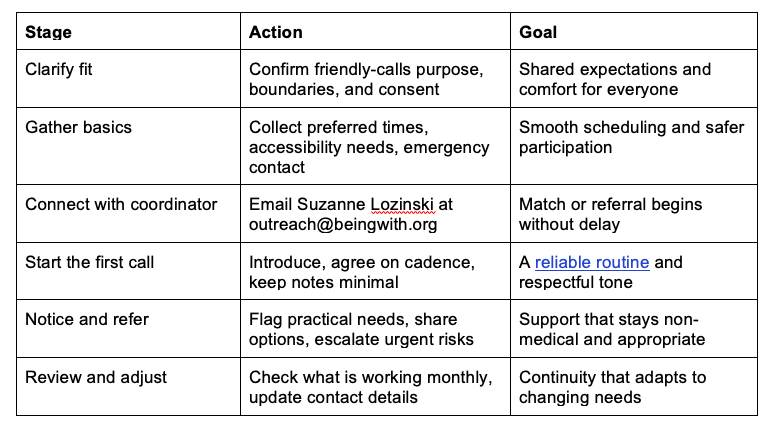
Each stage reinforces the next: clarity prevents drift, basics reduce friction, and coordination keeps the relationship sustainable. Over time, the review step protects trust and helps you respond thoughtfully when a senior’s needs shift.
Building Belonging Through the Seniors Calling Program, One Steady Check-In
Isolation can creep up quietly for older adults, especially when health changes or circles shrink, and it can leave people feeling unseen. The simple approach here is steady, respectful connection through seniors calling programs, showing up consistently, listening well, and keeping someone anchored to the community. When that rhythm is in place, the benefits of social connection for seniors show up in calmer days, better coping, and fewer long stretches alone. One caring call can turn isolation into belonging. Email Program Coordinator Suzanne Lozinski at outreach@beingwith.org to volunteer or refer a senior who could use regular support. That kind of community engagement for elderly support is practical advocacy for older adult well-being, strengthening resilience one week at a time. For more information about the Seniors Calling Program, please visit us here: http://www.compassionatecommunitycare.org/calling-service