
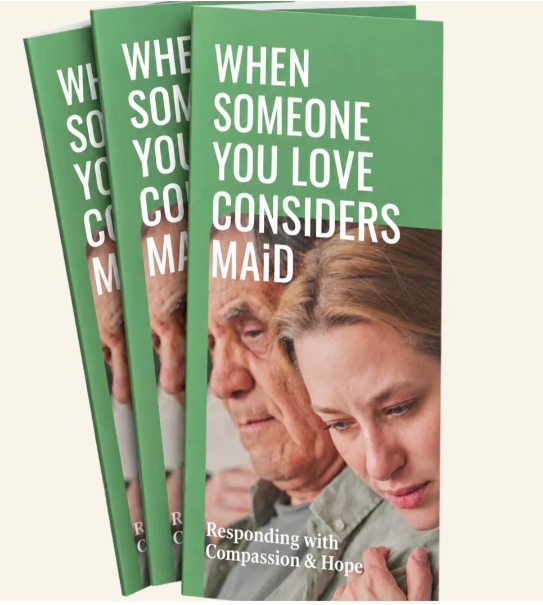
Many of us have never imagined how we would respond if a loved one told us they were considering MAiD. As a mother, there are many conversations I’ve prepared to have with my children, but until recently, medical assistance in dying was never one of them.
According to Health Canada, 76,475 people died from MAiD between 2016 and 2024. Behind each of these numbers is a person, a family, and a story. Many of these individuals experienced suffering that left them feeling as though their lives were no longer worth living.
So how would we respond if a loved one told us they were considering MAiD? The deVeber Institute has spent the past year working alongside physicians, bioethicists, and palliative care professionals to answer that very question.
When a Loved One Considers MAiD offers a guide to navigating these sensitive moments. It reminds us that one of the most important things we can offer someone considering MAiD is a response that says:
I am not afraid to sit with you in your suffering.
Even in your pain, you have a purpose.
I’m so glad you’ve shared this with me.
Stay here a little while. Let’s find the light.
The theme of hope is echoed throughout each page of this guide. It became clear to me that hope plays an important role in helping people endure difficult experiences. Sometimes, knowing that someone is willing to listen, understand, and remain beside us can make all the difference.
As a young teenager, I personally battled with severe depression and suicidal ideation. One day, when I was not sure I could continue on, my father shared a story about a time in his own life when he also felt hopeless and how he found the strength to persevere. In my naivety, I thought I must have heard every story my dad had to tell. But I was wrong. He had saved this story for a moment when I needed it most. He didn't meet me with fear; he met me with compassion. That connection was my lifeline. While our individual experiences of suffering are unique, the power of empathy to connect us and give us hope is universal.
The personal account of Lia Milousis featured in this resource is a brave example of how stories can help us connect. Lia's account shares how her suffering shaped her perception of death, to the point that it began to seem like a refuge. Unfortunately, her experience is not uncommon. Today, she shares her story as a reminder of the importance of hope, human connection, and ensuring that people experiencing suffering know they are not alone.
When a loved one considers MAiD and turns to you, you want to be prepared. This publication provides readers with simple guidance: Listen, empathize, connect, and help them find appropriate support. I'm very grateful for this guide, which prepares us to meet others' vulnerability with compassion rather than fear.
In a society where so many of us feel isolated in our suffering, this guide provides a clear message: even a small offer of compassion can remind someone that they are not alone.
As Canadians continue to become more familiar with MAiD, these conversations become increasingly important. Individuals experiencing vulnerability, isolation, illness, or inadequate support deserve to have their needs heard and addressed. At some point, many of us may find ourselves sitting beside a loved one who, in their suffering, is questioning whether their life is worth continuing. Being prepared to meet these moments with the ability to listen without judgment, offer support, and connect with appropriate resources is something every family can benefit from.
For those wishing to share this guide with others, copies can be ordered directly through the deVeber Institute at deveber.org.
If you find yourself supporting a loved one through a crisis, the Suicide Crisis Helpline (24-hour help, call or text 988) and Compassionate Community Care (1-855-675-8749) are available to offer support. Compassionate Community Care offers additional support and resources for individuals and families navigating illness, suffering, and end-of-life concerns, including mental health resources, pain management support, and pastoral care. Families can learn more about these services by contacting Compassionate Community Care directly.
No matter how difficult life becomes, there is always room for hope, connection, and support.
About the Author
Carling Rygielski is a wife, mother, and volunteer writer with Compassionate Community Care. She is passionate about the dignity and value of every human life and recognizes the essential role of empathy, hope, and compassion in supporting others through times of suffering and uncertainty.
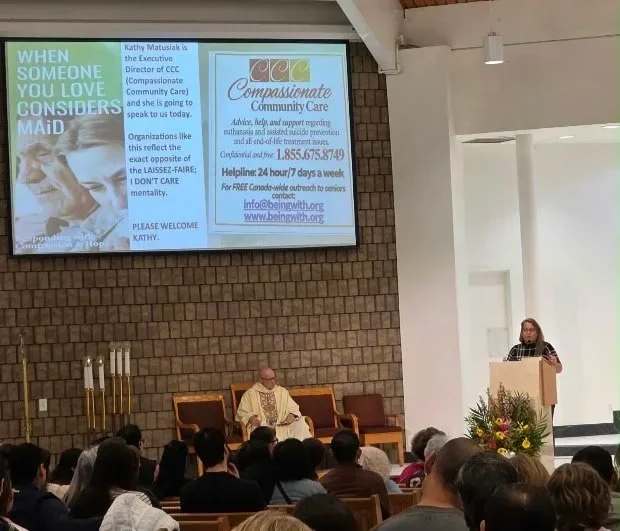
Kathy Matusiak Costa spoke at Sts Peter and Paul’s RC Church in Mississauga, ON